
Look Up Ford Part Numbers
Ford Part Number Lookup Tool for VIN Fitment and Catalog Search
Locating exact component blueprints within our digital repository requires complete mechanical tracking parameters. Whether you are performing a maintenance routing task or executing a structural collision overhaul, identifying parts by name alone introduces significant error margins.
Our digital Ford part number lookup platform interfaces directly with active Electronic Parts Catalog (EPC) mainframes, granting you immediate access to authentic engineering schemas, factory supersession tracking, and real-time inventory verification.
Utilizing a structural part identifier matching system based on precise vehicle variables is the most secure path to protect your vehicle assembly, maintain structural safety parameters, and eliminate shipping return overhead. This comprehensive tracking methodology ensures your replacement components remain completely synchronized with your original factory configuration.
The Structural Anatomy of a Ford Part Number
How Do Ford Part Numbers Work?
Ford engineering numbers utilize a standardized structural framework divided into three distinct segments:
- The Prefix (typically 4 characters): Identifies the original design year, vehicle development platform, and engineering division.
- The Base Number (4 to 6 digits): Specifies the actual mechanical component category (such as 2001 for front brake pads or 8501 for a water pump).
- The Suffix (1 to 3 characters): Dictates the specific design revision level, engineering update, or interior color profile.
Understanding this distinct three-part sequence allows you to decode the history and exact layout configuration of your component directly from the stamp markings on the old hardware:
- Deciphering the Prefix: The first character denotes the decade (such as E for the 1980s, F for the 1990s, L for the 2000s, and M for the 2010s), while the second digit records the specific year within that decade. The third character specifies the target vehicle line or platform model array, and the final character identifies the primary engineering component group responsible for the design.
- The Component Base Group Index: The center base number remains highly consistent across all vehicle families. Because a primary base sequence like 9601 always references an engine air filter regardless of whether it is installed on a compact commuter car or a heavy-duty commercial truck, referencing the base number locks your search into the correct system category instantly.
- The Revision Suffix Track: The suffix changes as Ford updates or refines a part's metallurgy, internal electronics, or chemical compounding. A suffix change from AA to AB indicates an optimized running factory modification, meaning the newer number is backwards-compatible and currently preferred.
Motorcraft Service Codes vs. Long Engineering Sequences
When cross-referencing components within our search matrix, you will encounter two separate numbering systems developed to streamline parts procurement:
- Long Engineering Part Numbers: These are the official, intricate alphanumeric strings stamped into components at the factory assembly line during manufacturing. They are ideal for cross-referencing hard-to-find internal hardware, deep bracket lines, and wiring connectors.
- Motorcraft® Short Service Numbers: To make routine maintenance more convenient for parts managers and consumers, Ford utilizes condensed retail service codes (such as FL-820S for oil filters or SP-546 for spark plugs). Our lookup tool automatically bridges these databases, meaning entering either the long engineering sequence or the short Motorcraft code will instantly surface the identical, factory-authorized component wrapper.
Resolving Assembly Production Splits via 17-Digit VIN Search
Ford frequently implements inline mechanical and electrical modifications mid-year directly on the assembly line. These adjustments create mid-year production splits, meaning two vehicles sharing the exact same model year, engine size, and trim level can require entirely different brake calipers, alternator amperages, or oxygen sensor pigtails based on their exact assembly date or assembly plant location.
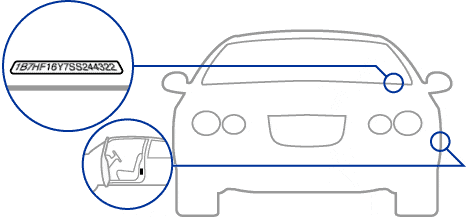
Relying on generalized catalog photographs is highly unreliable due to these hidden running production variances. Sourcing components via your unique 17-digit Vehicle Identification Number (VIN) eliminates this error margin completely.
Our database system instantly parses your chassis tracking code into its component data fields, isolating the World Manufacturer Identifier (WMI) and the unique Vehicle Descriptor Section (VDS). The engine filters then automatically screen out incompatible numbers, isolating the exact factory blueprint assigned to your specific vehicle when it rolled off the assembly line.
High-Sensitivity Systems Requiring Alphanumeric Verification
While standard exterior cosmetic moldings allow for small margins of variance, high-priority mechanical and electronic systems require mandatory validation through our digital platform before purchase:
- Co-Pilot360® Safety Sensor Electronics: Front bumper-mounted radar arrays, windshield lane-departure camera housings, and blind-spot monitoring sensor cards require exact alphanumeric code matches to maintain safe calibration thresholds.
- Forced-Induction EcoBoost® and Diesel Hardware: High-pressure fuel direct-injection seals, turbocharger oil supply lines, and intercooler wastegate actuators vary dramatically by engine build configurations and demand direct tracking verification.
- SelectShift® and Adaptive Transmission Controls: Internal automatic transmission solenoids, fluid valve body arrays, and electronic speed sensors split cleanly along assembly plant variations and cannot be interchanged.
Restore Factory Integrity Safely
Your vehicle operates as a highly integrated mechanical ecosystem, where every fastener, filter, and ignition module is balanced to sustain strict payload capacities, crash-test safety ratings, and emissions metrics.
Settling for cut-rate, unverified aftermarket substitutes compromises this engineering equilibrium, frequently triggering active diagnostic trouble codes (DTCs), early part degradation, and unpredicted electronic faults. By matching your numbers directly through our factory-authorized Ford and Motorcraft distribution portal, you secure uncompromised structural integrity and long-term driving safety for the road ahead.